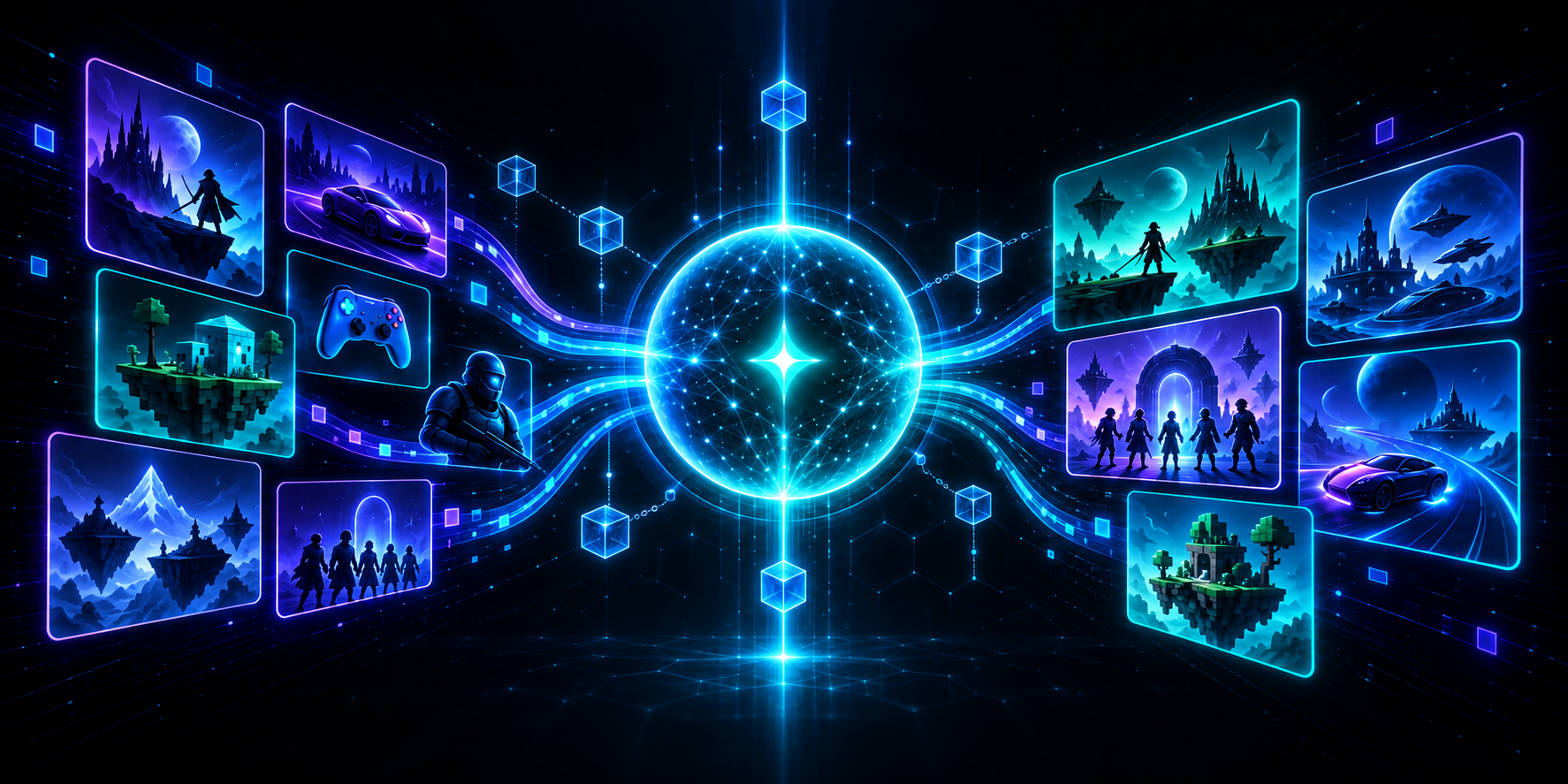
One of the most interesting thing happening in AI right now isn't how good models have gotten at writing, coding, or generating images. It's what happens when they stop working in isolation.
Blockchain promised to let assets, history, and identity move freely between systems, but the fully connected world never materialized because it lacked a shared understanding of what those assets meant across environments.
I think that's partly because we were solving the wrong layer of the problem.
Blockchain can confirm that something exists and who controls it, but it doesn't provide a shared understanding of its meaning, which AI might address by improving interpretation rather than record-keeping.
A shared record isn't a shared experience
The classic example from the blockchain gaming era is the portable sword. You earn or buy a sword in one game, it's then minted as an NFT, and in theory it should now travel with you into other games.
Except ownership was never really the hard part. The moment that sword shows up in a second game, someone still has to decide what it looks like there, how much damage it does, whether it fits the art style or the in-game economy, if the license even covers it, and whether the studio wants to support it at all. Even a second fantasy game needs artists, designers, and engineers to decide what the item becomes under a different set of rules.
Blockchain could carry the receipt. It was never built to carry the meaning.
Ownership answers "whose is this." Interoperability has to answer something much harder: what is this, here, and what is it allowed to do? Those are questions of interpretation, and interpretation is closer to what AI is actually good at.
AI as a different kind of bridge
Traditional integrations are deterministic. One system exposes an API, another is coded to hit it with exactly the right request, and every new pairing needs its own documentation, auth, mapping, and maintenance.
AI doesn't remove any of that engineering. What it adds is an interpretive layer on top of it; something that can take a plain-language request, look at what tools are actually available, pick the right one, and translate the result into the next step. The two systems on either end don't need to have been designed for each other in advance.
The Model Context Protocol (MCP) advances interoperability by giving AI a standardized way to discover available tools and understand how to use them, acting as a map rather than making systems inherently compatible.
The first interoperable games won't share swords
In all likelihood the impact of this in gaming will be almost invisible, and nothing like the old metaverse pitch.
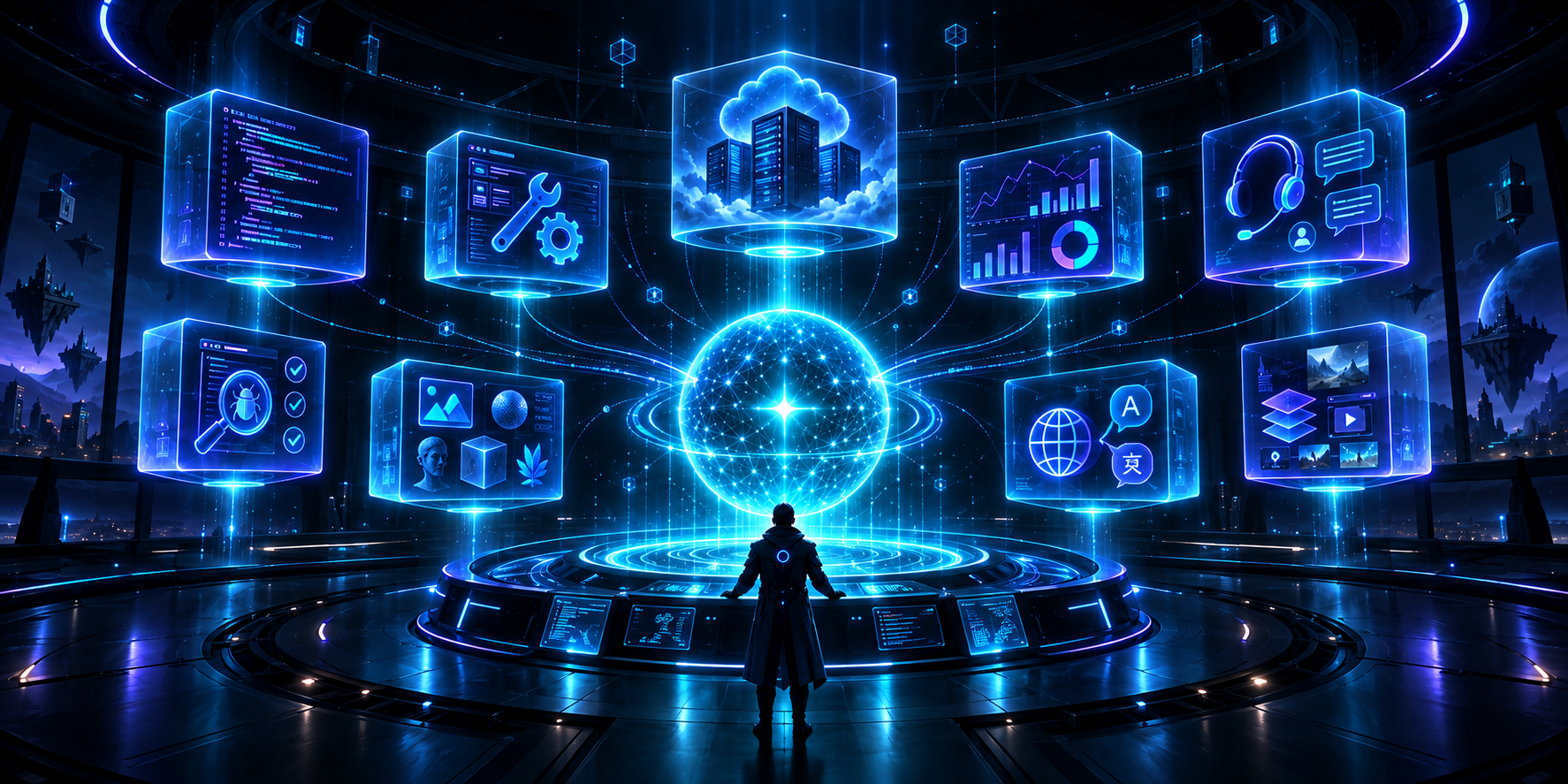
It'll happen behind the scenes, inside the less visible chain of tools that game development actually depends on, the engines, repos, analytics, localization, QA, asset pipelines, player support, and more. Each of those systems holds a different piece of the same story, and right now humans mostly stitch the pieces together.
That's the part AI agents are well positioned to absorb. Picture a developer asking an agent to dig into a recurring player complaint: cross-reference support tickets against telemetry, isolate the affected build, check recent code changes, and put together a reproducible bug report, or maybe even propose a fix and hand it to a person for review.
This isn't hypothetical anymore. Unity ships an official MCP server that lets a compatible agent inspect scenes, read console output, edit scripts, and trigger actions directly inside the editor. That doesn't make game development automatic. It does make a boundary that used to require a person a lot more permeable.
Every technology partnership carries an integration tax. AI can lower it, both by helping teams build the connectors and by making each connector useful across more workflows than it was originally built for. Engineers don't go away in this picture; they spend less time on one-off glue code and more time defining tools, permissions, and boundaries well.
From portable assets to portable context
This is where the old portable-sword idea gets interesting again. Once you drop the assumption that "interoperable" has to mean the exact same object moving unchanged between worlds.
A sword modeled for a gritty, realistic RPG shouldn't show up unaltered in a stylized mobile game, or in Fortnite, or in Minecraft. The geometry's wrong, the materials are wrong, the stats don't map. What if the asset itself was never the thing that needed to travel, but its context was?
Imagine what moves between systems isn't a 3D mesh, but a richer description of what the object actually is: this player earned it, it came from this world, its silhouette and color and a certain weight to how it feels are core to its identity And everything else is negotiable. A receiving game still decides whether it wants that context at all. But if it does, AI can increasingly help translate it into something that fits.
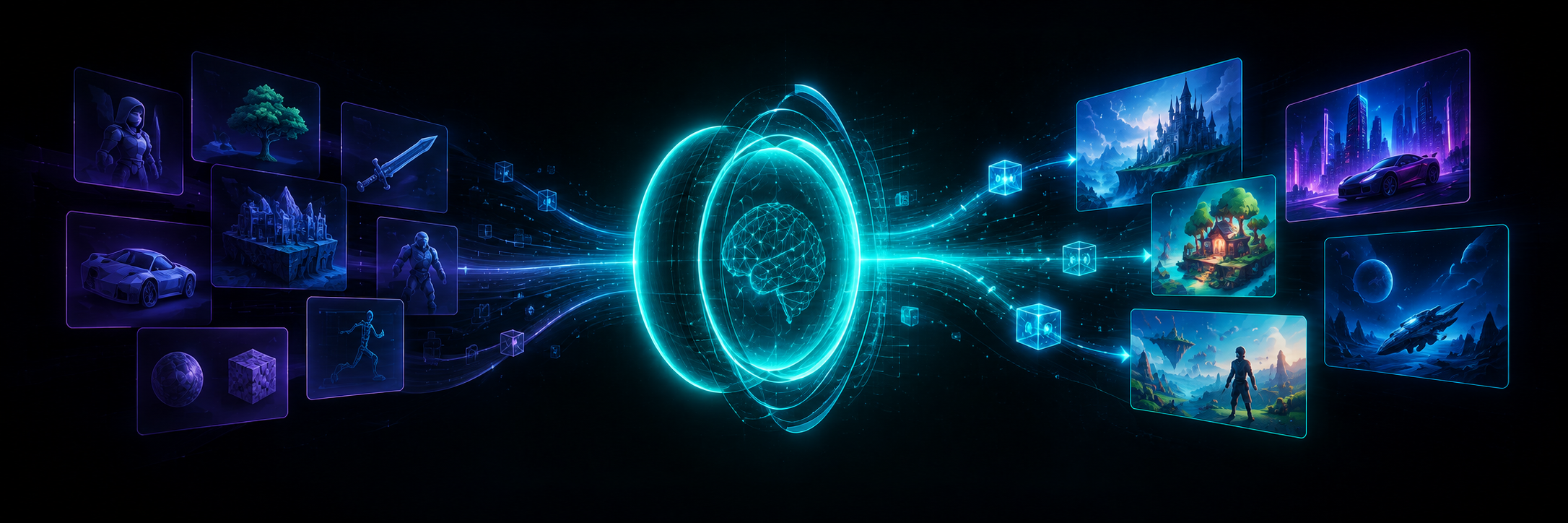
We're already seeing early, rough demos of this: AI models, such as GPT-6 Astra, that can take a reference image and creative direction, drive a tool like Blender, inspect what came out, and iterate without a person doing the intermediate steps by hand. That reframes the whole problem. Instead of asking Game B to support an asset built for Game A, you're asking an agent to help build Game B's version of it. Lower-poly for one world, hand-painted for another, rebuilt shaders and proportions for a third, all without pretending the three worlds were secretly the same world all along.
What travels isn't the final output. It's enough context to recreate something recognizable, and with meaning to players.
The same logic extends past objects. A player's accessibility preferences - larger text, subtitles, inverted controls - could travel with them. A creator could carry a character's design rules instead of one fixed model file. A studio can carry brand constraints into a completely different production tool. The connective layer stops being about forcing every system to speak one language, and starts being about giving them enough shared context to translate between languages they already speak.
That's arguably closer to how interoperability actually works outside of software. We carry identity, preferences, history, and intent into different environments, and each one interprets them slightly differently.
None of that makes the hard questions go away, though. Who decides which parts of an object are essential and which are up for reinterpretation? How much can something change before it stops being the same thing? What happens when the thing you're translating contains someone else's IP? Context makes adaptation possible. It doesn't make it permitted.
Being connected isn't the same as being reliable
What makes an LLM useful as an integration layer (its comfort with ambiguity) is also its biggest liability. It works fine when it's summarizing feedback or hunting for information across five tools. It's a real problem the moment the action changes a live economy of a game, publishes something publicly, spends player's money, deletes data, or touches someone's account.
"Probably right" isn't a good enough bar for anything you can't undo. Any agentic system worth trusting will need hard, deterministic boundaries wrapped around the probabilistic parts: validated inputs, confirmation steps for anything sensitive, logging, and a way to roll things back.
And security gets harder, not easier, as more systems get wired together - open connectivity makes capability easy to share. It also makes vulnerabilities easy to spread.
Interoperability is still a choice
There's a second reason blockchain never produced a genuinely connected gaming world, and it has nothing to do with technology: many companies didn't want one.
Closed systems aren't only a technical limitation, they protect business models, licensing deals, player relationships, safety policy, and creative control. A publisher may not want a competitor's product reinterpreting its characters. Two games might fight for the same players' time and money rather than benefit from being portable between them.
AI can't reason its way around a decision that was never about capability in the first place. If anything, as technical integration gets cheaper, the remaining reasons something stays closed becomes more visible, and they're increasingly about strategy and trust rather than engineering cost.
None of this makes blockchain irrelevant, to be clear, it can still be the right tool wherever independent parties genuinely need a shared, trustless record, provenance, or settlement. AI doesn't replace that. But a lot of the interoperability problems people blamed on missing consensus were actually caused by mismatched formats, scattered context, and integrations too expensive to justify building. In gaming specifically, proving the sword existed was never the hard part. Deciding what it should become somewhere else always was.
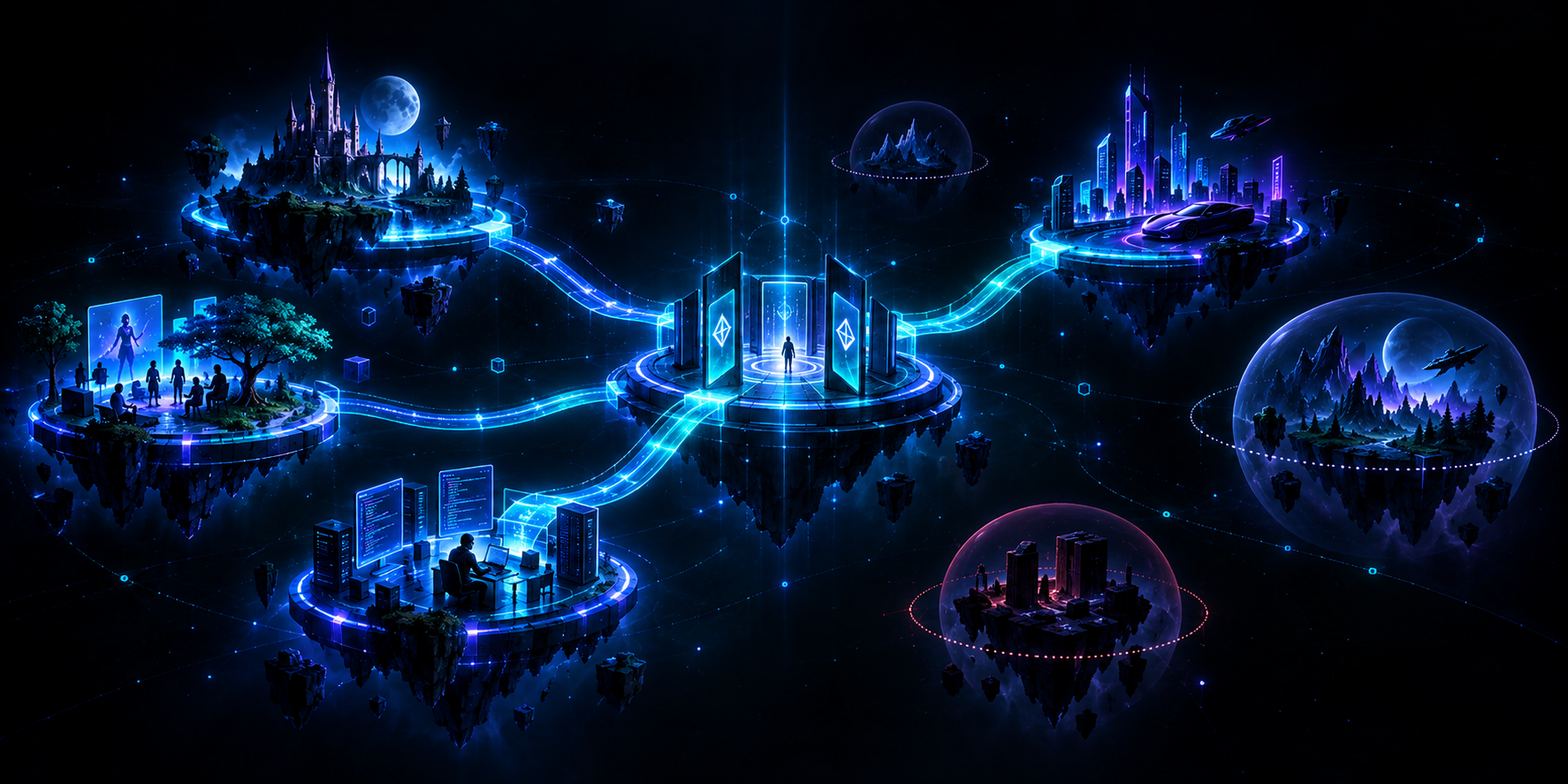
A more connected world, if we choose it
I don't think every game, app, and device is heading toward interoperability. Some connections are too risky, others make no commercial or creative sense, and that's fine.
What is changing is the cost of trying. Integration has always favored scale: large companies could afford more automation and closer platform relationships, while smaller teams lived with disconnected tools and ideas they couldn't justify building. If AI and open protocols minimize that gap, interoperability stops being a giant infrastructure project reserved for a handful of companies. It starts being something a much wider range of builders can actually choose.
The next connected world probably won't look like the one we were promised. It's more likely to start with a developer asking one question across five different tools. A player carrying their preferences into a new game without filling out a settings menu from scratch. An object from one world getting reinterpreted for another, instead of pretending the two were built to be the same thing.
Those changes sound small on their own. Put together, they could shift who gets to build connected experiences, how fast systems adapt to each other, and what "portable" even means going forward.
Blockchain gave digital systems a place to store the truth. AI might give them a way to understand, translate, and act on each other.
That could end up being the more consequential kind of interoperability.