The recent agreement by Josh Kushner and Bob Iger to acquire the Los Angeles Lakers caught my attention for a reason that has surprisingly little to do with basketball.
The deal values the Lakers at around $12.5 billion. There are obvious reasons sports franchises keep becoming more valuable: scarcity, media rights, worldwide audiences and incredibly engaged fans.
But there is another way to look at it.
The Lakers are an asset whose value comes partly from everything that has happened around it. If AI makes it dramatically easier and faster to create things, what happens to the things that remain difficult to create?
Thrive is making two bets
Josh Kushner's Thrive Capital is one of the investors backing the technology driving the current transformation, including AI.
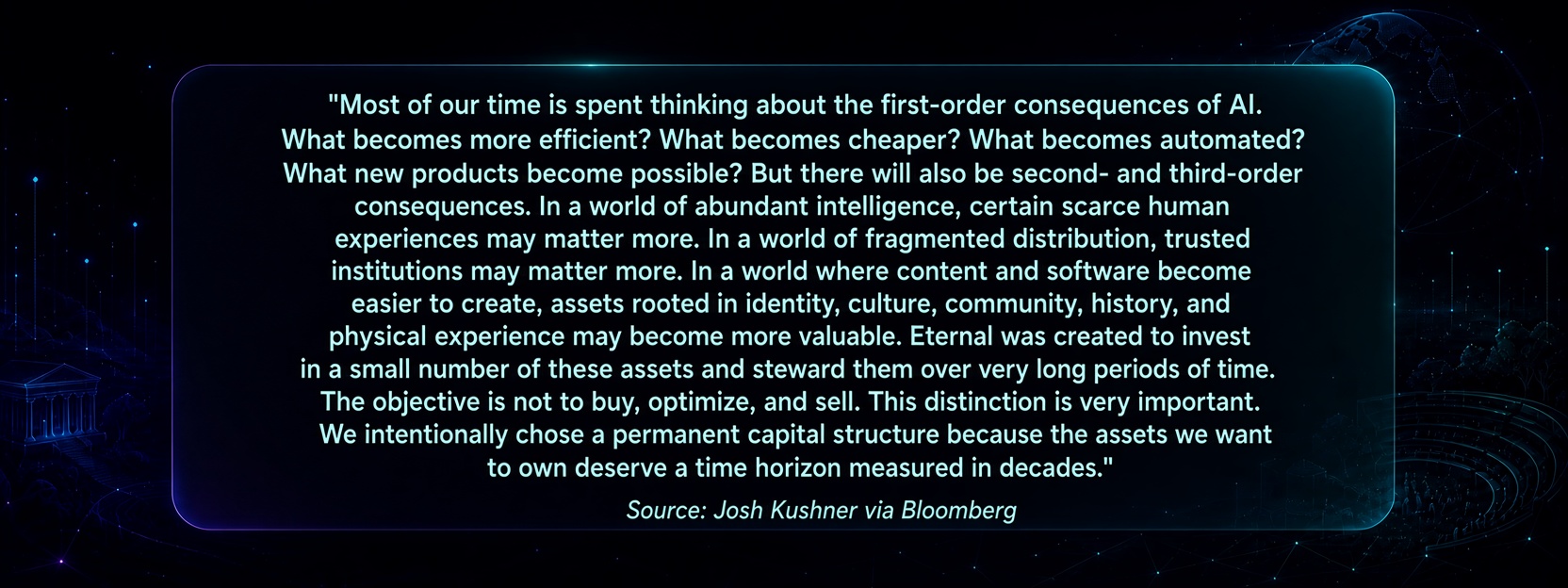
At the same time, Thrive recently created Thrive Eternal, a permanent-capital holding company focused on a very different kind of asset: iconic franchises and cultural institutions built around tradition, identity and shared experience. Its first announced partnership is an expected investment in the San Francisco Giants, subject to league approval. I find that combination particularly interesting.
On one side, Thrive is investing in technologies that could make intelligence, software and creation dramatically more abundant. On the other, it is investing in assets whose value has been built slowly, often over decades, and which technology cannot simply generate on demand.
Those ideas may reinforce one another. As creation gets easier, things that are harder to manufacture – trust, community, history, rituals and existing relationships with an audience – can become relatively more important.
Kushner’s Thrive Fund Grows Sevenfold to $3.7 Billion on AI Bets. Source: Bloomberg.
The Lakers fit neatly into that thinking. And I believe gaming does too.
AI is making creation abundant
I've written before that one of AI's biggest effects on gaming will be to move the bottleneck away from production.
Games won't suddenly become easy to make. But prototyping, art, code, localization, community tools and eventually more meaningful parts of development will become faster and more accessible.
That should let smaller teams pursue more ambitious ideas, publishers test more concepts and communities build more around the games they care about.
The less obvious consequence is much more content: more games, apps, video, worlds and polished experiences competing for roughly the same amount of attention.
Some will be great. A lot probably won't be. Either way, the volume goes up.
And when making something becomes less scarce, another question matters more: why should anyone care about this particular experience?
The Lakers are not just basketball
You can create another basketball team, build another arena or launch another competition. What you can't do is create another Lakers.
You can't reproduce decades of championships, Magic Johnson, Kareem, Kobe, Shaq and LeBron. You can't manufacture the connection between the team and Los Angeles, or the attachment generations of fans have built over time.
A huge part of the value is what people have invested without thinking of it as an investment: time, attention, memories, traditions, stories, memes and relationships. That accumulates.
Gaming has properties that increasingly look like this too.
Mario isn't valuable simply because Nintendo knows how to make a platform game. League of Legends isn't valuable only because Riot can build a competitive game. Counter-Strike isn't just the software running it today.
These properties have history, legacy, communities, rituals, video creators and moments attached to them. People remember specific events, players, maps and eras.
AI can generate enormous amounts of content around these worlds. What it can't easily recreate is the history, memories and relationships that made people care about them in the first place.
Strong IP also gives you somewhere to start
Another often-overlooked advantage of established IP is distribution.
One of the hardest problems for any new game or entertainment product is getting noticed. Established properties begin somewhere different.
A new Pokémon game isn't entering the market like an unknown creature-collection game. A League of Legends spin-off already has players, creators, partners and media with a reason to pay attention.
That doesn't guarantee success. Strong IP has produced plentt of bad products, and new IP will keep breaking through. But the starting line is different.
As AI increases the volume of content, I suspect this becomes more important. Discovery is already difficult. If everyone can produce more, earning attention from zero gets harder.
An existing audience helps not only protect what you have, but launch what comes next – a new game, app, movie, product, merch or competitive format.
You aren't starting every new idea from an empty room.
Beyond games as services, games as cultural touchstones
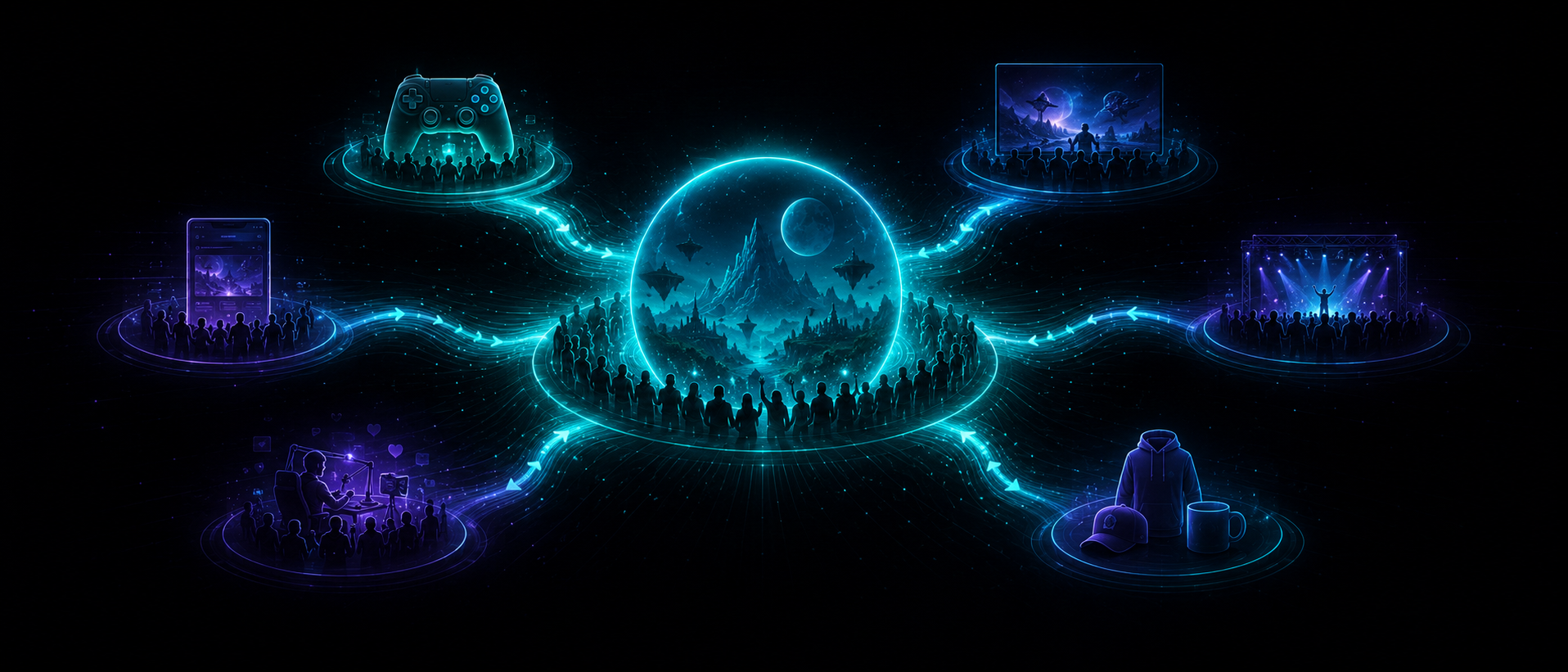
Gaming has traditionally been launch-driven. Increasingly, the industry has moved toward games as services: keep improving the game, keep players engaged and keep giving them reasons to come back. For the strongest properties, I wonder if there is another step beyond this.
Some games can become legacy brands, part of culture.
A service is trying to keep someone engaged. An legacy brand can become something people feel they belong to.
That changes what an IP owner is responsible for. The job isn't only to produce content, but to understand what made the property matter and protect it as the world changes.
That can mean supporting creators and communities, embracing new mediums, keeping a brand consistent or knowing when not to over commercialize everything people value.
Bob Iger's involvement in the Lakers is interesting through this lens. Much of his career at Disney involved taking existing worlds and characters and finding new ways for people to experience them.
Pixar, Marvel, Star Wars and Disney's own IP are different from a basketball team, but the challenge is related: how do you expand something without damaging why people cared?
Gaming companies with enduring IP increasingly face the same question.
Esports and events gives digital IP a physical layer
Esports and events are interesting because they add a physical layer to digital IP.
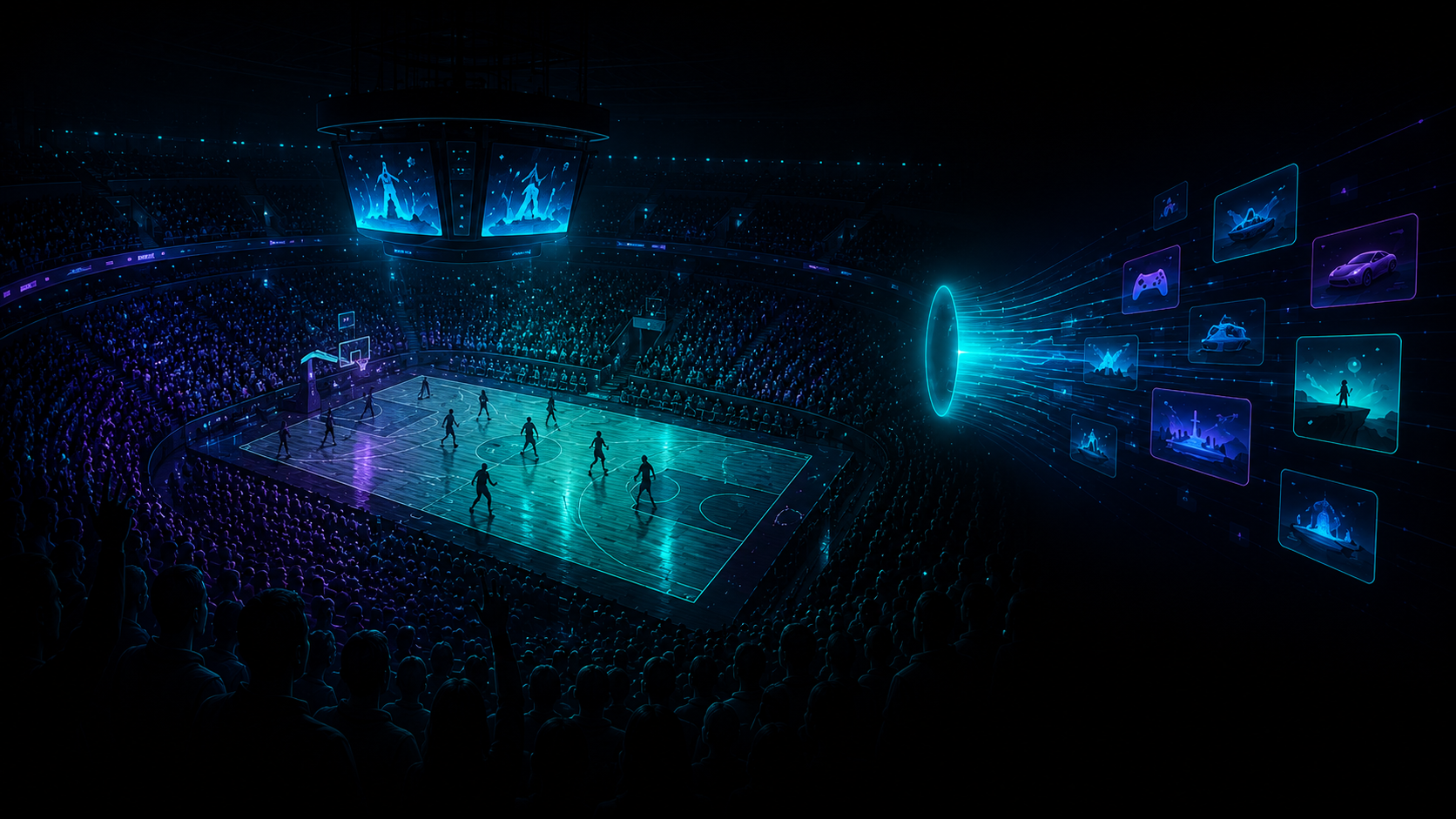
You may prompt-generate another trailer, social asset or digital experience quickly. It is much harder to recreate 15,000 people in the same arena, watching a final together and leaving with a memory they may still discuss years later.
The crowd reacts together. The result isn't known in advance. Sometimes something happens that becomes part of the community's memes and history. That makes esports and IRL experiences interesting beyond the direct economics of running an event.
An event gives a digital property a physical place. Fans travel there, players become recognizable personalities. People meet friends they previously only knew online.
Cologne means something to Counter-Strike fans because of what has happened there over many years. The same is true of tournaments, venues, players and moments across these in-person, and competitive experiences.
AI can create plenty of content about those moments. It can't recreate having been there.
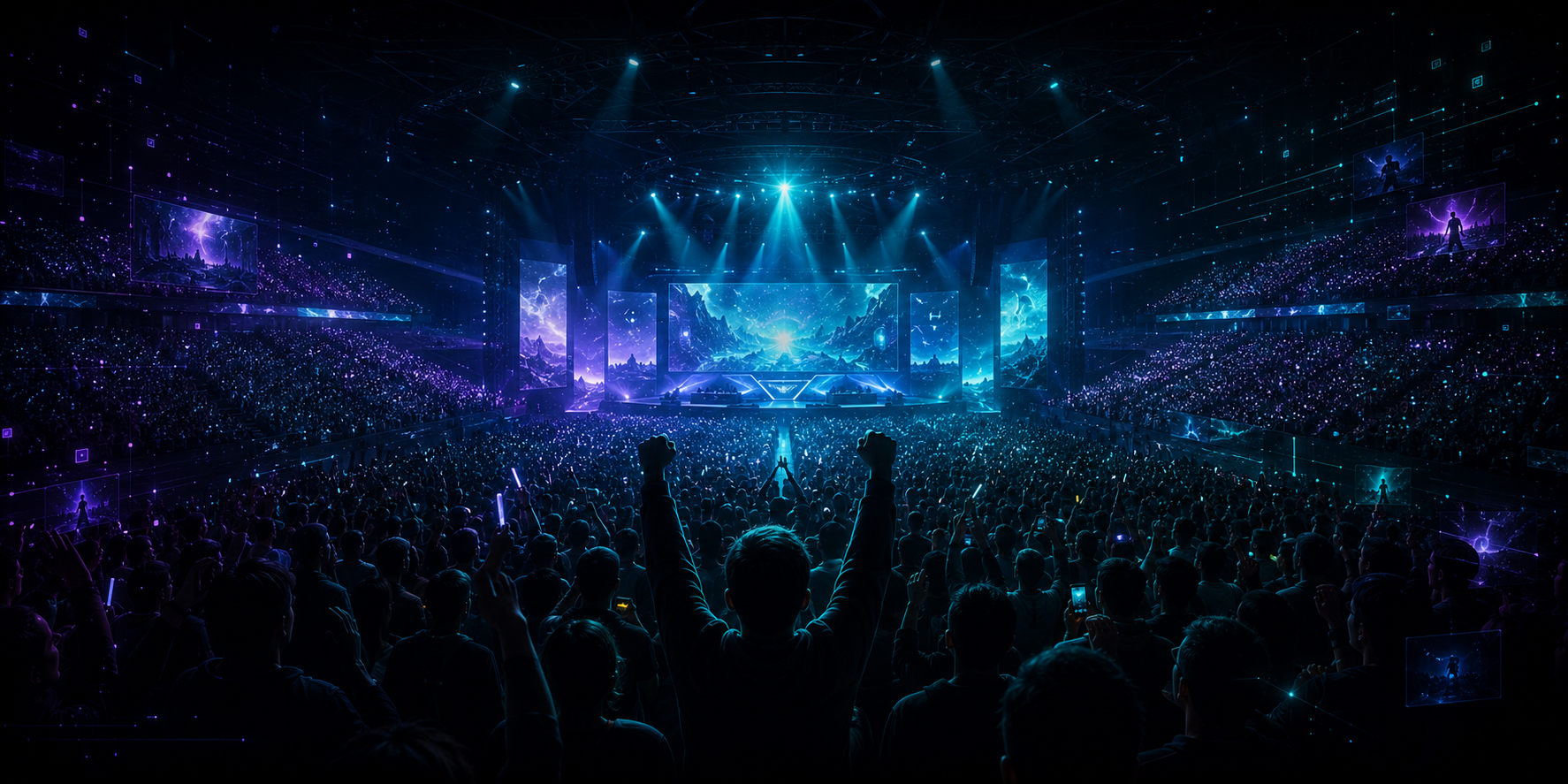
This is why I think we should be careful about thinking of events purely as marketing. They are expensive and complicated to run. If the main question is how many new users an event acquires, the economics can be difficult to justify.
But a packed Lakers arena isn't simply an advertisement for watching the next game. Being there is part of the product, and part of what makes the Lakers mean something.
For the right games, esports can do something similar. It gives a digital property a physical history. People travel, meet one another and their favourite influencers. Players and venues become part of the mythology.
Not every game needs this. But for properties that want to last for decades, that physical layer may be more strategically important than we give it credit for.
The moat may be what AI can't generate
None of this makes me pessimistic about AI in gaming. Quite the opposite.
AI could let more people create games, help smaller teams pursue ideas that were previously too expensive and let IP owners experiment more cheaply. There will be great new games and new IP because of it.
I suspect the more interesting question is what happens after that first explosion of creativity.
If production becomes dramatically cheaper, production capacity itself becomes less defensible. The scarce things start to look different: attention, judgment, distribution, trust, community, history and the relationship players already have with a particular world.
The Lakers aren't worth $12.5 billion because basketball broadcasts are difficult to produce. They're valuable because nobody can just make another Lakers and manufacture the legacy accumulated around the team.
Gaming already has properties with some of those characteristics: brands people grew up with, communities that survived technology shifts, worlds people spent thousands of hours inside and competitive moments people still remember years later.
AI may make it much easier to build the next game. It may also make everything accumulated around the games people already love harder to replace.
And, to me, that is the more interesting part of the story.